

Finding the right words to describe how something looks is a vital part of learning a language. While the word ugly is very common, it is often not the most precise or descriptive choice for a student to use in their writing. Using the same word repeatedly can make a story feel flat or uninteresting.
By exploring synonyms for ugly, children can learn to express themselves with more detail and emotion. This article explains why teaching synonyms matters, how to use specific books and tools to help students learn, and provides many examples of these words in action.
10 Ugly synonyms
- unattractive
- plain
- unsightly
- unpleasant
- hideous
- repellent
- displeasing
- repugnant
- revolting
- disagreeable
Adding these ugly synonyms to your vocabulary helps you to speak articulately and express yourself impressively in writing. Start learning ugly synonyms now.
Using synonym stories to expand vocabulary
One of the most effective ways to teach new words is through context. This means showing how words live together in a sentence or a story. The book Synonym Stories: Words Belong Together from the Study Zone Big Kid Books series is an excellent resource for this purpose. This book is designed to help students grow their vocabulary quickly by pooling similar words together within short narratives.
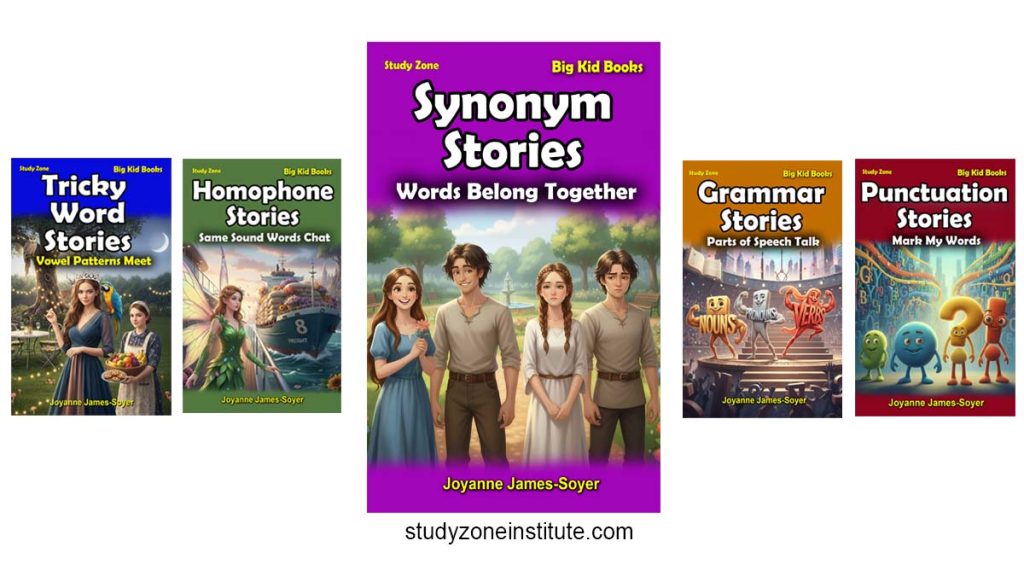
Each chapter in the book focuses on a specific concept and floods the reader with synonyms. Instead of looking at a dry list of words in a dictionary, the student sees the words used in a natural way. This repetition helps the brain make connections between the new words and the concepts they represent. When words are grouped this way, the student learns that they belong to the same family. This makes it much easier to remember them later when they are writing their own stories or essays.
Teachers and parents can use these stories as a starting point for daily lessons. By reading a chapter together, you can identify all the different ways the author described a single idea. This method moves away from memorisation and toward true understanding. It turns a vocabulary lesson into an engaging reading experience.
Free learning tools for students
To assist in the learning process, this article offers a free poster and a simple worksheet. These visual aids are designed to make the transition from the book Synonym Stories to independent writing much smoother.
Ugly synonyms poster
The free poster is a visual guide that lists several synonyms for the word ugly. Having this poster on a classroom wall or a bedroom door provides a constant reminder of the new words they are learning. It acts as a quick reference guide when a student is stuck on a sentence and needs a better word choice.

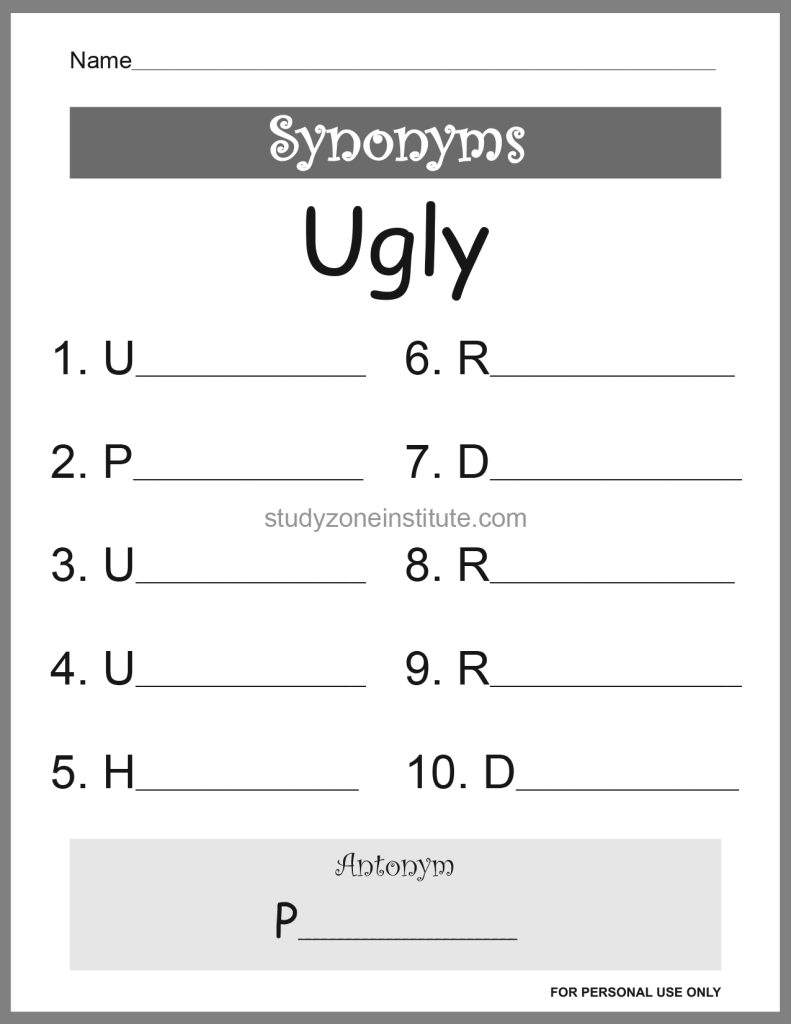
Ugly synonyms worksheet
The worksheet includes simple clues based on the words found on the poster.
Practical examples of synonyms for ugly
To help students understand how to swap the word ugly for something more specific, it is helpful to provide clear examples. Parents and teachers can use these sentences to show how a different word changes the tone of a sentence.
If a student wants to describe something that is messy or not neat, they might use the word unsightly. You could say that the piles of trash on the corner were very unsightly for the neighbors to see. This sounds more formal and focuses on the fact that the scene is not pleasant to look at.
When a student is writing a story about a monster or something scary, the word hideous is a great choice. An example sentence would be that the dragon had a hideous face with green scales and yellow eyes. This word suggests that the sight is shocking or even frightening, which is much more descriptive than just saying the dragon was ugly.
Sometimes something is not necessarily scary but just very plain or poorly made. In this case, the word homely might fit well. You could tell a student that the old wooden birdhouse was a bit homely but it kept the birds warm and dry. This word implies a lack of beauty without being mean or harsh.
Another useful synonym is grotesque. This word is perfect for things that look strange or distorted in a way that is hard to believe. For example, the stone statues on the roof of the old building had grotesque expressions that looked almost human. This helps the reader imagine something very specific and unusual.
For things that are just generally unpleasant to look at, the word unappealing is helpful. A teacher might suggest the sentence that the cold grey porridge looked very unappealing to the hungry children. This word focuses on the lack of desire to look at or eat something.
If something is very dirty or messy, the word scruffy can be used. You might describe a character by saying that the puppy looked scruffy after playing in the mud all afternoon. This is a gentle way to describe an appearance that is not tidy.
Tips for teaching synonyms at home or in class
Consistency is the most important factor when teaching new vocabulary. One way to do this is to pick a word of the week. If the word of the week is ugly, you can spend several days talking about its synonyms. Ask the student to find examples of unsightly or hideous things in the books they are already reading.
Another fun activity is to play a word swap game. Give the student a simple sentence like the cat was ugly. Then, ask them to change the word to make the cat sound scary, then make it sound messy, and then make it sound just plain. This shows them that they have the power to change the entire feeling of a story just by picking a different synonym.
Encourage students to keep a personal word journal. When they find a new synonym in Synonym Stories or on their poster, they can write it down and try to use it in a sentence of their own. This creates a sense of ownership over their expanding vocabulary. Over time, they will stop reaching for the simplest words and start choosing words that truly express what they want to say.
Why teaching synonyms matters for young writers
When children begin to write stories, they often rely on a small set of familiar words. These words are like tools in a toolbox. If a child only has a few tools, they can only build simple things. When a parent or teacher introduces synonyms, they are giving the child a much larger set of tools. Synonyms are words that have the same or very similar meanings. Teaching these words allows a student to choose the exact shade of meaning they want to convey.
A robust vocabulary is essential for being expressive. In story writing, the goal is often to paint a picture in the mind of the reader. If every bad-looking character or broken object is simply called ugly, the reader does not get a clear image. Is the object messy? Is it scary? Is it just plain? Each synonym carries a slightly different feeling. Learning these differences helps children become more thoughtful observers and more creative writers. This skill is useful at any age because a strong vocabulary leads to better communication in every part of life.
The role of descriptive language in child development
Beyond just writing better stories, learning synonyms helps children develop better critical thinking skills. When a child learns that there are five different ways to describe something that is not pretty, they have to think about which one fits best. They have to analyse the situation and decide if the object is hideous, unsightly, or just homely. This process of evaluation is a high-level thinking skill that will help them in all subjects, from science to social studies.
Expressive language also helps children with their emotional intelligence. If they can describe things with more nuance, they can often describe their own feelings with more nuance as well. While the focus here is on the physical appearance of objects or characters, the habit of seeking the right word is a skill that transfers to every type of communication.
Conclusion
Teaching children synonyms for common words like ugly is a simple yet powerful way to improve their writing and communication skills. By using resources like Synonym Stories: Words Belong Together and supporting them with visual posters and worksheets, parents and teachers can make the learning process both fun and effective. When a student learns that they do not have to settle for the most basic words, they unlock a new level of creativity. They begin to see their writing as a way to share a specific vision with the world. With the right tools and a little bit of practise, every child can become a more expressive and confident writer.
See also: