
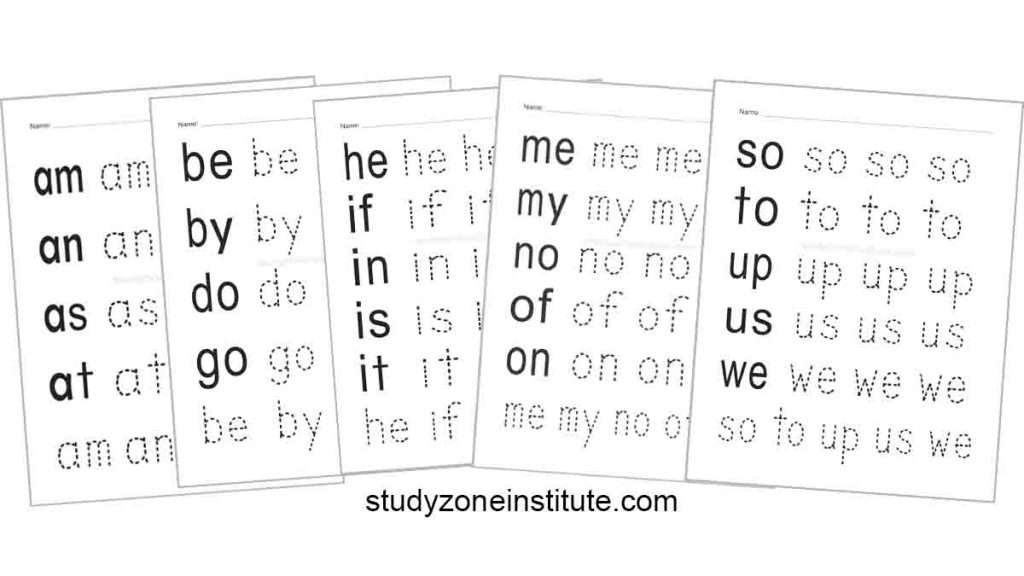
Two-letter words represent a critical phonetic hurdle for struggling readers because they often deviate from standard decoding rules and rely on advanced phonological awareness. While these small words appear simple to proficient readers, they frequently function as sight words with irregular vowel and consonant sounds, such as the ‘v’ sound in ‘of’ or the ‘z’ sound in ‘is’.
This article provides a comprehensive analysis of the cognitive processes required to master these foundational units, including phonemic awareness and left-to-right decoding. It explains why older learners often mask these difficulties by memorising the distinct shapes of longer words like ‘dinosaur’ while failing to process the abstract nature of ‘am’ or ‘by’.
Readers will gain professional insight into the specific linguistic traps found in 2-letter pairings and the necessity of targeted reading intervention before advancing to complex syllables.
By addressing these foundational gaps, educators and parents can prevent the cumulative learning delays that occur when a student relies on coping strategies rather than true literacy skills.
Key Takeaways
- Foundational 2-letter words often require sight word recognition because they frequently break standard phonetic rules.
- Struggling readers often mask literacy gaps by memorising long word shapes while failing to decode short abstract words.
- Phonemic awareness is essential for distinguishing irregular sounds like the ‘v’ in ‘of’ versus the ‘f’ in ‘if’.
- Consistent left-to-right tracking must be mastered to prevent the common reversal of words like ‘no’ and ‘on’.
- Unresolved struggles with 2-letter words create significant barriers to decoding more complex multi-syllabic vocabulary later.
Have you ever noticed that the ‘f’ in ‘if’ and ‘of’ sounds differently? How about the ‘s’ in the 2 letter words ‘is’ and ‘us’ that makes 2 sounds?
You’ve probably learned these words a long time ago and never questioned the differences. A struggling reader however is confused about a lot of things that come easy for you.
CLICK HERE to Improve Spelling and Reading Skills with 10 BOOKS OF SHORT STORIES with rimes.
If you ever wonder, how is it that a struggling reader can say the words ‘people’ and ‘dinosaur’ when spotted but find it very difficult to read 2 letter words, then this article addresses your concerns.
To start, do a proper reading assessment on the struggling reader. This will tell you the problems to fix with your very own reading intervention programme or reveal signs for you to seek professional help. Here is the process that is necessary to read 2 letter words properly.

Get 1 free month of Skillshare
- Get unlimited access to thousands of inspiring classes
- Taught by industry leaders & working professionals
- Topics include illustration, design, photography, and more
The hidden complexity of 2-letter words
Many educators and parents assume that the shorter a word is, the easier it must be to read. However, 2-letter words are frequently the site of significant literacy breakdowns for struggling learners. While a child might successfully identify a complex word like ‘people’ or ‘dinosaur’ by its unique visual silhouette, 2-letter words lack distinct shapes. They require precise decoding and a high level of phonological awareness.
Phonological and phonemic awareness
Before a student can link letters to sounds, they must possess phonological awareness—the ability to recognise the various sounds in spoken speech. For a struggling reader, a sentence can sound like an undifferentiated string of noise, similar to hearing a foreign language.
Phonemic awareness, a subset of this skill, involves isolating the individual sounds within a single word. In 2-letter words, this is particularly difficult because the sounds often shift. For example, in the word ‘of’, the letter ‘o’ makes an ‘uh’ sound, and the ‘f’ makes a ‘v’ sound. Without specific instruction, a student relying on basic phonics will find these inconsistencies incomprehensible.
The role of phonics and decoding
Phonics is the bridge between spoken sounds and written symbols. Decoding involves sounding out each letter based on phonemic awareness and spelling rules. A primary hurdle in 2-letter word mastery is the directionality of reading. Students must consistently process from left to right. A failure in this area often leads to the reversal of words, such as reading ‘no’ as ‘on’.
The sight word trap
Sight words are terms that do not follow conventional phonetic patterns and must be memorised. Words such as ‘as’, ‘is’, ‘of’, ‘by’, and ‘to’ fall into this category. In many traditional classrooms, these nuances are overlooked. If a student does not master these high-frequency 2-letter words, they begin to develop coping strategies that fail them as they progress to 3, 4, and 5-letter words.
Common confusion pairs in 2-letter words
To effectively support a struggling reader, one must understand the specific linguistic traps presented by certain word pairings.
Nasal and vowel confusion
- am vs an: These words look nearly identical. The ‘m’ and ‘n’ both produce nasal sounds, making them difficult for a reader with weak phonemic discrimination to distinguish.
- as vs us: Here, the ‘s’ functions differently. In ‘as’, it represents a ‘z’ sound, while in ‘us’, it maintains the standard ‘s’ sound.
The ‘y’ and ‘f’ variations
- be vs by: The letter ‘y’ is a frequent source of confusion because it can represent multiple sounds (the ‘i’ sound in ‘by’ or the ‘e’ sound in ‘any’).
- of vs if: This is one of the most common hurdles. The ‘f’ in ‘of’ is voiced (sounding like ‘v’), while the ‘f’ in ‘if’ is unvoiced.
Spatial and visual reversals
- on vs no: Because these words contain the same letters, they are the ultimate test of a child’s ability to read from left to right.
- be vs do: The visual similarity between ‘b’ and ‘d’ is a well-known struggle. If these are not mastered at the 2-letter level, the student will face compounding errors in more complex texts.
Coping mechanisms vs literacy
Struggling readers are often highly intelligent and develop sophisticated coping mechanisms to hide their difficulties. They may use the ‘word-shape’ strategy, where they memorise the visual outline of a long word. Because ‘dinosaur’ has a very specific shape with various ascending and descending letters, it is easier to ‘read’ than ‘an’ or ‘am’, which look like simple blocks.
However, this strategy is not sustainable. As the volume of required reading increases, the memory cannot hold enough shapes to compensate for a lack of decoding skills. This is why many children seem to read well in early stages but ‘hit a wall’ around age seven or eight when the text becomes more abstract and the font sizes decrease.
Strengthening the foundation
Reading intervention must begin with a proper assessment to identify these specific gaps. Addressing 2-letter words is not ‘going backward’; it is ensuring the foundation is strong enough to support the weight of advanced literacy. By clearing up the confusion surrounding phonemes and sight words at this level, educators provide the student with the mechanical tools necessary for fluent reading.
Phonological awareness
A struggling reader usually lacks phonological awareness. This is simply being aware of the different sounds that are made in speech.
To put yourself in the shoes of a struggling reader, think about listening to someone who speaks a foreign language that you don’t understand. You hear a string of sounds, but cannot tell when a word begins and when it ends.
Phonological awareness is the umbrella over the many sounds made in speech. These include segmenting a sentence into words, noticing these words have syllables, some of them rhyme, they have alliteration which means they have the same beginning sounds, assonance which is same vowel sounds, and knowing the individual sounds which is phonemic awareness.
Phonemic awareness
Phonemic awareness is being aware of each sound made in a single word. Let’s look at the words ‘of’ and ‘off’. The letter ‘o’ represents 2 sounds which are ‘uh’ in ‘of’ and ‘or’ in ‘off’.
Also, the letter ‘f’ in ‘of’ makes the sound that ‘v’ represents. The ‘ff’ in ‘off’ represents the sound that the letter ‘f’ usually represents. Some readers are unaware of these different sounds in 2 letter words before they begin to learn about phonics.
Phonics
Phonics is the representation of sounds with writing. You start off learning that there are 26 letters in the alphabet, 21 are consonants and 5 are vowels, but ‘y’ can be both. Then, you learn to blend these letters to make words.
Students learn to identify letters and sounds, and they learn to associate the sounds with letters. They blend sounds as in combining ‘short u’ and ‘s’ for ‘us’ and ‘short i’ and ‘f’ for ‘if’. This is the start of decoding.
Decoding words
Decoding is a skill required for reading. It involves sounding out each letter based on a person’s phonological and phonemic awareness, and knowledge of phonics, spelling rules and syllables. For 2 letter words, one essential skill that is part of decoding is reading from left to right.
Some children learn the 2 letter words ‘to’, ‘do’, ‘go’, ‘so’ and ‘no’ without issues. Others however struggle with problems such as reading ‘no’ as ‘on’ because they don’t read from left to right, differentiating the letter ‘b’ from ‘d’, and understanding why ‘o’ makes 2 sounds in ‘do’ and ‘go’. This is the stage when they start learning sight words since there are 2 letter words that cannot be sounded out.

Sight words
Sight words go against everything that was learned about letters in the alphabet and the sounds that they represent. The words ‘as’, ‘is’, ‘of’, ‘by’ and ‘to’ have letters that represent different sounds in the alphabet. These words must be learned.
In a traditional classroom, these concerns are usually ignored and the class moves on to decoding 3, 4, 5 and 6 letter words. These words contain syllables as in joyous – joy/ous. The problem intensifies as the student learns bigger sight words.
Learning bigger sight words too quickly
Many readers jump to learning bigger sight words before they are ready to do so. This is where the complication happens that causes readers to struggle at ages 7 and older.
While the rest of students can comfortably add ‘g’ to ‘do’ and read ‘dog’ or ‘t’ to ‘no’ and read ‘not’, struggling readers still have underlying issues that were never addressed. Jumping to sight words before grasping these concepts causes a delay in the foundation for reading for many children.

Outschool – Where Kids Love Learning
Over 140,000 Interactive Online Classes
Keep kids ages 3-18 engaged with thousands of classes and camps on the topics they’re most passionate about!
Coping strategy of struggling readers
Struggling readers learn to cope with their challenges by looking at the shape of big words instead of decoding them. They memorise sight words effectively convincing everyone around them that they are learning.
They know the words ‘people’ and ‘dinosaur’ because they are very distinct and are easy to recognise. However, it is more difficult to use the word-shape strategy on 2 letter words because they require understanding of phonological and phonemic awareness, phonics, and a lot of practise.
Practise reading 2 letter words
When doing reading intervention, the reader must practise 2 letter words properly after learning sounds and letters that represent them. Here are pairs of 2 letter words that can be confusing to a struggling reader.
am and an
A struggling reader may find ‘am’ and ‘an’ look and sound similar. The ‘m’ is really ‘n’ doubled and they both have nasal sounds.
as and us
The ‘s’ in ‘as’ represents the ‘z’ sound and the ‘s’ in us represents ‘s’. This may be confusing and get mixed up.
be and by
Some readers learn the words ‘be’ and ‘by’, then move on to the 3 letter words ‘any’ and ‘day’ without question. Others are thrown aback at the different sounds that the letter ‘y’ represents as in ‘i’ in ‘by’, ‘e’ in ‘any’ and ‘a’ in ‘day’.
of and if
The ‘f’ in ‘of’ represents the ‘v’ sound and the ‘f’ in ‘if’ represents the ‘f’ sound. The differences must be learned properly.
on and no
The words ‘on’ and ‘no’ have the same letters and can be problematic for struggling readers. These words usually reveal the child’s ability to read from left to right.
be, by and do
The letters ‘b’ and ‘d’ are usually a pain for most struggling readers. If the 2 letter words ‘be’, ‘by’ and ‘do’ are not mastered before moving on to 3 letter words, then the reader would have even bigger problems.

Conclusion
Even though 2 letter words are small, they are definitely not insignificant. They are actually the foundation for word building as a reader becomes more advanced. Clear up issues that a struggling reader may have with 2 letter words and you would strengthen the groundwork needed for improving the reading skill.
When you buy something through our retail links, we may earn commission and the retailer may receive certain auditable data for accounting purposes.
- How do debits and credits work? A beginner’s guide to accounting
- Mastering subject verb agreement: Interactive teaching strategies for diverse learners
- Game world and real world: Helping children appreciate life and build genuine social connections
- Why older children struggle with basic spatial concepts and how multisensory learning can fix it
- Master homophones and homographs: Easy strategies for struggling learners
See also:
5 Reading assessment topics to give proper diagnosis
6 Common reading assessment mistakes to avoid
Reading intervention: 20 critical literacy problems to address
Reading lessons: Change someone’s life now
How to help my 7-year-old read better?
Parts of speech: A simple guide and test to master grammar
Autism signs parents should take seriously
Learning styles – visual, auditory, read-write, kinesthetic
16 Debate topics and points to master argumentative essays

Build Your Own Gaming PC
Get a legendary gaming PC build without the added stress of building your own by hand. Shop our custom gaming PC models or learn more about what you’ll need to consider before you start building.
Build Your Own Gaming PC
Get a legendary gaming PC build without the added stress of building your own by hand. Shop our custom gaming PC models or learn more about what you’ll need to consider before you start building.