
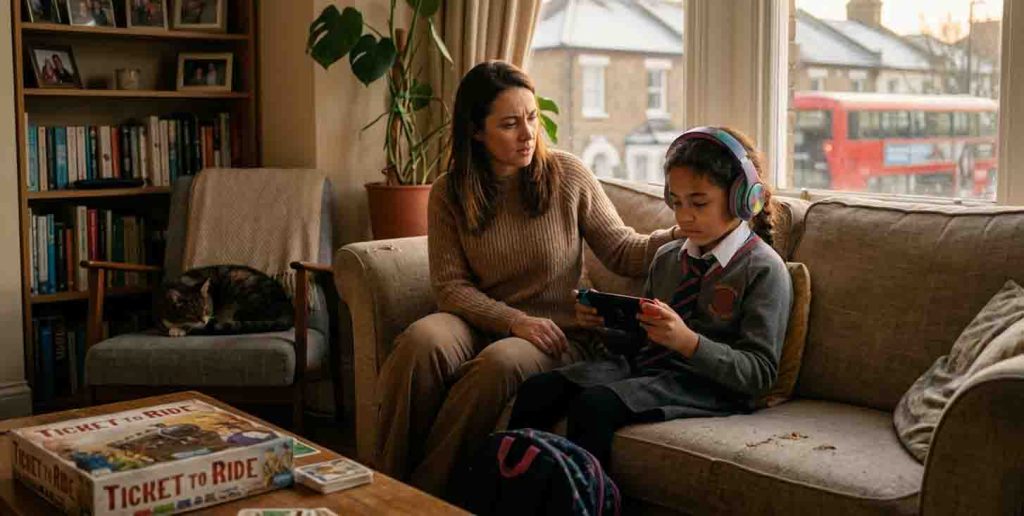
Understanding the dynamic between the game world and real world reveals why children often prefer digital environments over offline reality. Modern video games and short form videos offer constant gratification, autonomy and social acceptance that offline environments struggle to match. Children frequently display apathy towards school, traditional hobbies and face-to-face interactions because physical environments lack the rapid feedback loops of digital spaces.
By introducing shared family activities, active parental involvement and collaborative conversations, parents can bridge the divide between screen time and reality, helping children develop healthy social skills and a deeper appreciation for life.
Key Takeaways
- Children often find digital environments more appealing than physical reality because online spaces provide instant gratification and complete autonomy.
- Apathy towards offline activities typically stems from the stark contrast between high-stimulation screens and the slower pace of daily life.
- Parental participation in shared real world experiences is essential for demonstrating the value of offline relationships.
- Collaborative family routines help restore balance without forcing an immediate total ban on digital privileges.
- Gradual inclusion of engaging physical activities helps children rebuild social confidence and emotional resilience.
The relationship between the game world and real world has become one of the most pressing concerns for modern families. Parents across the globe frequently observe their children transforming from energetic individuals into distant, passive observers whenever screens are powered down.
Within digital realms, children experience continuous excitement, vibrant visual stimuli and a total absence of traditional adult supervision. They operate as customised avatars, accumulating virtual currency, unlocking achievements and receiving immediate validation from peers who share identical interests.
When forced to transition back to the physical domain, the contrast is stark. Everyday responsibilities, educational demands and interpersonal conversations suddenly feel dull, demanding and unrewarding. Understanding why this digital pull is so powerful represents the first critical step towards helping children reconnect with the world around them.
The psychological pull of virtual environments
The contrast between digital spaces and daily life is profound. Virtual platforms are meticulously engineered to satisfy fundamental psychological needs that the physical domain often restricts. Inside a video game, young players possess agency, choices and a sense of mastery that is rarely replicated in traditional classrooms or household routines.
Every action yields an immediate outcome, whether it is completing a quest, defeating an opponent or building a virtual structure. This continuous feedback loop triggers dopamine release, creating a deep sense of satisfaction that makes low-stimulation activities seem uninviting.
Furthermore, virtual spaces eliminate many of the social anxieties that accompany face-to-face interactions. Online personas allow children to present idealised versions of themselves without the fear of immediate physical judgement or awkward non-verbal cues. They find instant acceptance within communities centred entirely on shared gameplay.
In contrast, navigating offline social dynamics requires emotional patience, non-verbal interpretation and tolerance for conflict, skills that develop slowly over time. When children feel overwhelmed by the complexities of physical relationships, the predictability of digital platforms offers a comforting escape mechanism.
Recognising screen induced apathy
When children become heavily attached to digital platforms, their emotional expression in everyday settings often changes noticeably. Parents and educators frequently report a pervasive lack of enthusiasm for activities that previously brought joy.
Excursions to the cinema, visits to public parks, shopping trips and leisure reading are often met with reluctance or outright refusal. Academic performance may suffer as schoolwork begins to feel like an unnecessary burden compared to the compelling goals waiting inside a favourite title.
This detachment is frequently misinterpreted by adults. Teachers and parents may assume the child is struggling with profound mental health challenges or displaying intentional defiance. While professional guidance is sometimes necessary, the underlying explanation is often far simpler. The brain becomes accustomed to the elevated sensory stimulation provided by short form media and interactive titles.
Consequently, standard human interactions and routine tasks feel uninteresting by comparison. When parents attempt to address this behaviour through harsh reprimands or sudden confiscations, children often react with intense frustration, viewing the removal of devices as an unjust punishment rather than an effort to help.
The necessity of active parental involvement
Addressing this digital imbalance requires parents to examine their own habits and leadership styles within the household. Enrolling a child in sports teams or community clubs yields minimal results if parents spend those sessions distracted by their own devices in the stands.
Children quickly recognise discrepancies between adult instruction and adult behaviour. Telling a young person to value physical reality while remaining absorbed in personal screens sends a confusing message that undermines trust.
To help children rediscover the value of physical life, parents must actively participate in real world experiences alongside them. Real change occurs when adults step away from their work and digital distractions to immerse themselves directly in shared pastimes. Rebuilding a child’s appreciation for physical reality requires effort, consistency and a genuine willingness to make shared time enjoyable for everyone involved.
Reconnecting through structured family activities
Restoring balance between digital entertainment and daily living does not require an immediate removal of all technology privileges. Abrupt changes often cause intense emotional distress and increase resistance. A far more effective strategy involves introducing structured, high-value offline experiences that gradually demonstrate the warmth and enjoyment found in real world relationships.
Shared meals around the dining table
Establishing a consistent habit of gathering around the dinner table without digital devices provides a reliable foundation for daily connection. Mealtime offers an ideal opportunity for open conversation, allowing family members to share experiences without the pressure of formal discussions. Over time, predictable shared meals build a sense of belonging and stability.
Interactive cooking sessions
Involving children in culinary preparation turns routine chores into collaborative tasks. Allowing them to select recipes, gather ingredients and assist with preparation fosters a sense of accomplishment similar to virtual achievement systems. Cooking together teaches practical life skills while encouraging spontaneous conversation in a relaxed setting.
Dedicated family movie evenings
Planning weekly movie nights complete with popular snacks gives children something tangible for which to look forward. Permitting the child to choose the film grants them autonomy and control within the physical home, reassuring them that their personal tastes and choices are valued by the family.
Cooperative board game nights
Classic table games offer excellent opportunities to recreate the competitive and strategic elements of video games within a physical setting. Titles requiring teamwork or problem solving help children experience real time interaction, shared laughter and healthy competition alongside family members or close friends.
Outdoor gatherings and backyard cooking
Organising outdoor lunches and simple backyard activities provides healthy exposure to natural light and physical movement. Inviting neighbours or peers of similar ages encourages natural social development, helping children build confidence in non-digital environments.
Active arcade games and physical play
Participating in energetic outings such as laser tag arcades allows parents and children to share adrenaline filled experiences together. Playful competition bridges the gap between digital action themes and real physical exertion, proving that real life can be just as exciting as a screen.
Collaborative sports and fitness
Engaging in outdoor sports, cycling or swimming together promotes physical health while teaching perseverance and teamwork. Playing together demonstrates that adults are willing to invest physical energy into the relationship, building mutual respect and stronger bonds.
WEEKLY FAMILY CONNECTIONS PLANDAY | ACTIVITY | PRIMARY BENEFIT |
Tuesday Evening | Family Meal & Chat | Consistent Connection |
Thursday Evening | Interactive Cooking | Skill & Autonomy |
Friday Evening | Dedicated Movie Night | Low-Pressure Fun |
Sunday Afternoon | Outdoor Sports & Play | Physical Well-being |
Navigating difficult conversations about screen balance
Initiating discussions about adjusting screen habits requires empathy, clarity and calm determination. Children who fear losing access to their favourite titles are likely to respond defensively. Parents can navigate these conversations effectively by focusing on partnership rather than conflict, emphasising that privileges are not being revoked, but rather balanced with meaningful family time.
Initiating the discussion with empathy
“We notice how much happiness you get from playing your games and spending time with your online friends. We respect your interest in that world. At the same time, we miss spending dedicated time with you in person, and we want to ensure our family stays close and strong.”
Resisting resistance with firm reassurance
“We are not taking away your gaming privileges or removing your favourite activities. We are setting aside specific times during the week where we hang up our screens together and focus on fun activities as a family. You still get to enjoy your digital time, but we are going to make sure our real world connections remain just as strong.”
Offering choice and personal agency
“You get to help decide what we do during our family time. Whether we try a new sport, pick a movie, or cook a special meal, your input matters. We want to do things that you genuinely find fun and interesting.”
Alternative solutions for long term appreciation of physical life
Beyond family centred activities, encouraging broader exposure to physical hobbies helps children construct a rich identity outside of digital spaces. Assisting a child in discovering offline passions creates alternative sources of mastery, confidence and peer recognition.
Hands-on creative hobbies
Encouraging activities like woodworking, musical instrument practice, drawing or physical modelling provides tangible outcomes for time invested. Seeing a physical project progress from start to finish builds personal satisfaction that digital achievements cannot match.
Community involvement and volunteering
Participating in local community projects, environmental cleanups or animal shelter support shifts focus outward. Helping others fosters empathy, provides perspective and builds a strong sense of real world purpose.
Exploration of the natural environment
Regular exposure to hiking trails, camping sites or coastal areas helps reset overstimulated nervous systems. Natural settings offer quiet spaces that allow children to recharge and reflect away from constant visual prompts.
Rebalancing the influence of digital spaces requires patience, structure and genuine commitment from parents. By actively participating in shared experiences, maintaining open communication and protecting family routines, parents can guide their children toward a balanced life where both virtual entertainment and physical reality are appreciated appropriately.
Sources
- Media Psychology Research Center: Digital Media and Child Development Guidelines https://www.mediapsychology.org
- World Health Organization: Guidelines on Physical Activity, Sedentary Behaviour and Sleep for Children https://www.who.int
- American Academy of Pediatrics: Family Media Use Plan and Screen Time Recommendations https://www.aap.org
See also:
Students do not care? Discover the root causes and solutions
Managing disruptive behaviour: Why your students shut down and how to re-engage them
What happens when a student shuts down and how to help
Waking the apathetic student: Understanding and engaging the disengaged learner
Why your child does not care about anything (and what to do)
The class clown: Understanding, guiding, and channelling their energy
Personalised learning: Tailoring education for every student’s success
The attentive student: A guide for teachers and parents
How to help a distracted student focus: The ultimate guide for success
The delayed student: Challenges, solutions, and support strategies
Helping the quiet student thrive: Practical tips for teachers and parents
The outspoken student: Encouraging healthy communication
Students do not care? Discover the root causes and solutions
The focussed student: Characteristics, challenges, and support strategies
The lazy student: Understanding and supporting their needs
The unfocussed student: Understanding and supporting their needs
Strategies for helping the disciplined student become well-rounded learners
Understanding and guiding the undisciplined student
Helping the accelerated student thrive: Tips for parents and educators
The attentive student: A guide for teachers and parents
@studyzoneinstituteltd